
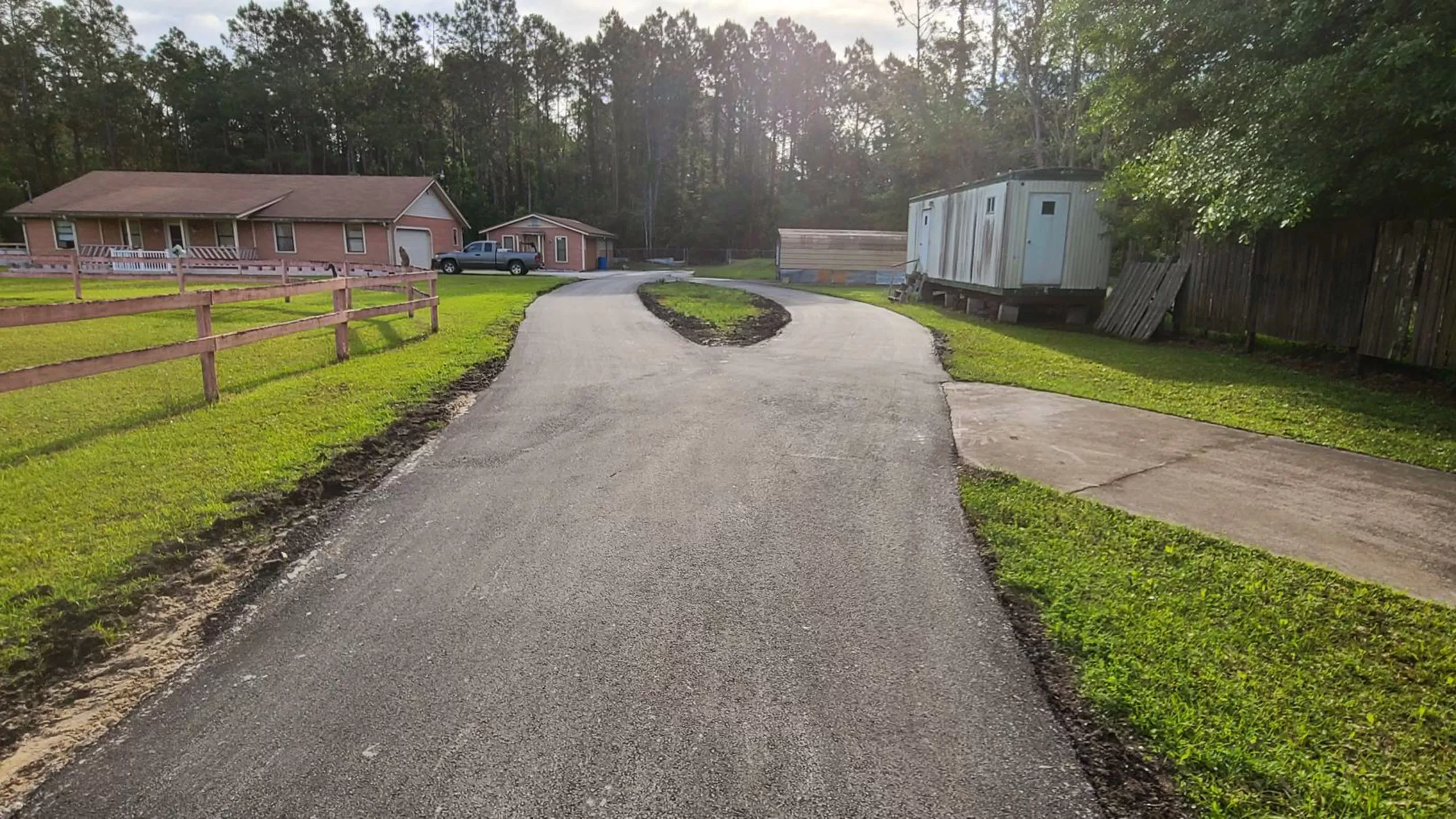
Driveway Paving FAQ
Are you considering driveway paving for your home? If so, great! Our Callahan, FL, asphalt paving contractors are here to take care of you throughout the entire process. With that said, most people still have questions about cost, timing, and what to expect. Whether you’re installing a new asphalt driveway or planning repairs, understanding the basics helps you make better decisions and avoid surprises.
Here are clear answers to common questions homeowners ask about this type of residential paving.
What’s the Process for Paving a Driveway?
Paving a driveway starts with site preparation. Our local asphalt paving contractors will remove old materials if needed, grade and compact the base, and ensure proper drainage. Next comes new asphalt installation, followed by smoothing and compaction. The goal is a durable surface that resists cracking and water damage.
How Long Does Driveway Paving Take?
Most residential asphalt paving services like this can take 1-2 days, depending on size and weather. Larger or more complex projects may take longer, especially if excavation or total asphalt driveway replacement is required.
How Much Does Residential Driveway Paving Cost?
Costs vary based on driveway size, condition, and location. A new asphalt driveway typically costs less than concrete, but factors like grading, drainage, and materials still affect pricing. Resurfacing an asphalt driveway is usually more affordable than a full replacement.
When Should I Consider Driveway Replacement?
If your driveway has deep cracks, potholes, or drainage issues, replacement may be the best option. Minor damage can often be fixed with asphalt repairs, but widespread deterioration usually calls for a full rebuild.
What’s the Difference Between Resurfacing & Replacement?
Resurfacing an asphalt driveway involves adding a new layer over the existing surface. It works well when the base is still solid. Replacement, on the other hand, means removing the old driveway and starting fresh. Our contractors can assess which option fits your situation.
How Soon Can I Use My Driveway After Paving?
After having a driveway paved, you should wait at least 24 hours before walking on it, and around 7 days before driving on the pavement. Curing time is essential for long-term durability, so keeping heavy loads, like big cars or trailers, off of it for a few days helps protect the surface.
What Is Driveway Sealcoating & Why Is It Important?
Driveway sealcoating adds a protective layer over asphalt to shield it from water, UV rays, and chemicals. Asphalt sealcoating also improves appearance and extends the life of your driveway. Most contractors, including ours, recommend sealing every 2-3 years. For brand new asphalt, wait at least 90 days before sealing. Ideally, aim for 6–12 months to let the surface fully cure and for all oils to come to the surface.
How Do I Maintain My Asphalt Driveway?
Regular asphalt driveway maintenance keeps your driveway in good shape. Clean debris, fill small cracks early, and schedule sealcoating as needed. Proper care reduces the need for major repairs and extends the lifespan of your asphalt.
Is Asphalt a Good Choice for Residential Driveways?
Yes, asphalt is a popular choice for homeowners because it’s cost-effective, durable, and performs well in cold climates. At First Coast Asphalt Solutions, we can tailor our asphalt paving services to suit your property and usage needs.
Request a Driveway Paving Quote
A well-installed and maintained driveway adds value and convenience to your home. With the right approach and support from our residential asphalt paving contractor in Callahan serving Greater Jacksonville, FL, the process of paving a driveway becomes straightforward and worthwhile. Call First Coast Asphalt Solutions today at (904) 721-6300 or contact us online to request a quote.